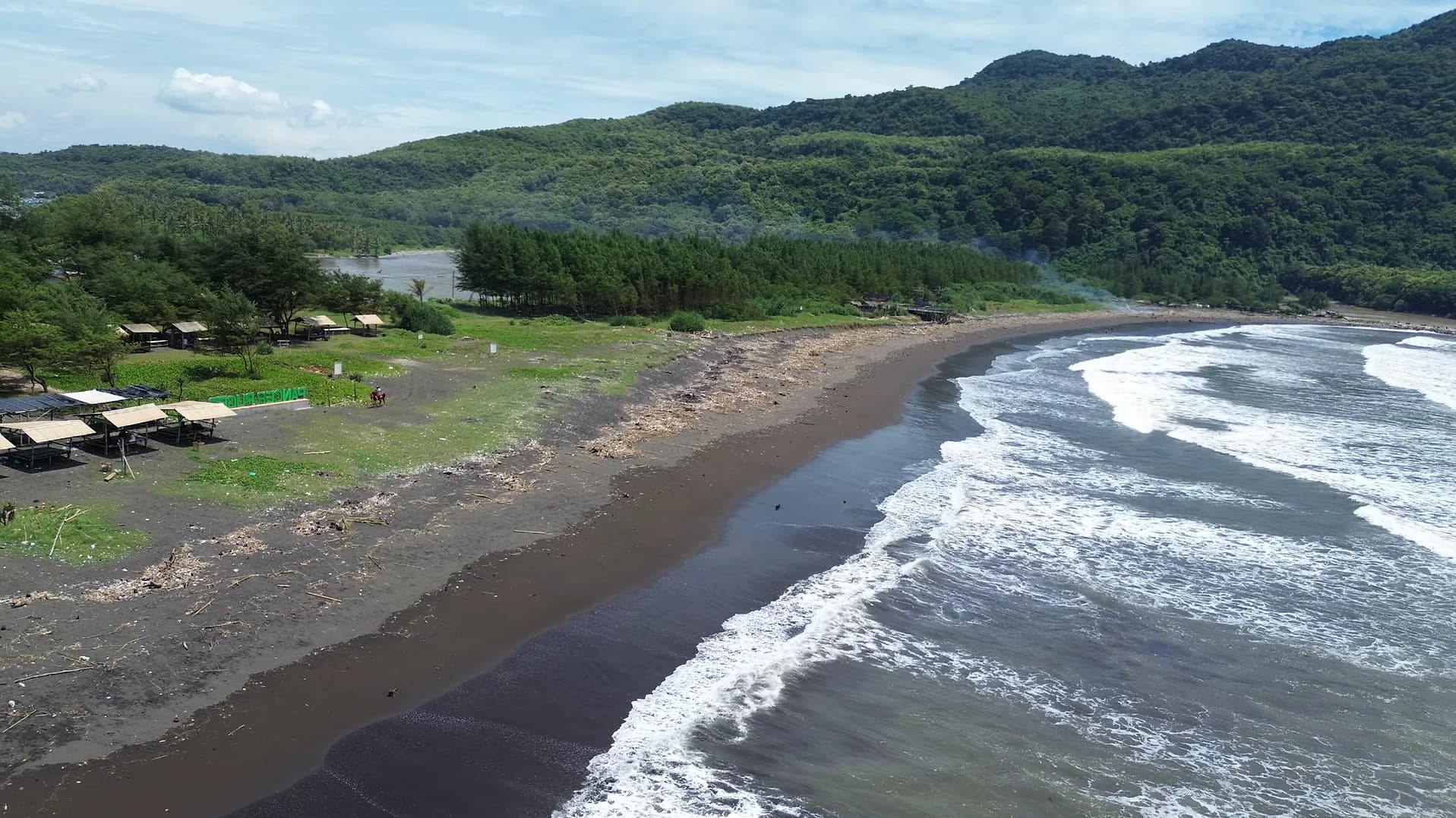
Virtual Nature Expedition: Exploring the Puger Ecosystem
Behind the crashing waves and the mesmerizing sunsets of Puger Beach, lies a hidden secret that threatens our future. Through 360° exploration videos and augmented reality technology, let's go beyond the limits of sight to uncover how microplastic pollution infiltrates the food chain and affects human health. This beauty is ours, and so is our responsibility to protect it.
About WAVES-SSI
Web-based Augmented & Virtual Environmental SSI (WAVES-SSI) is a web-based learning ecosystem designed to bridge the gap between classroom science theory and the complex socio-environmental realities in the field. The platform integrates two main immersive technologies, 360° video and Augmented Reality (AR), to explore socio-scientific issues (SSI) around waste management at Pancer Beach and the Puger fish auction site (TPI Puger).
360° video and augmented reality (AR) help students observe contexts that are hard to bring directly into the classroom. Through activities and worksheets, students identify the components of a system, trace cause-and-effect relationships, build representations of those relationships, and weigh the impact of different courses of action.
WAVES-SSI is designed to support Education for Sustainable Development (ESD) in the education of pre-service biology teachers. The learning experience is intended to help students develop systems thinking skills and sustainability awareness that they can carry into their teaching practice and their lives in the community.
WAEJUC Research Team
Research consortium
WAEJUC
Western Australia–East Java Universities Consortium
 Universitas JemberJember, Indonesia
 Universitas Negeri MalangMalang, Indonesia
 Curtin UniversityPerth, Australia
Principal investigator
Hikmah Buroidah, S.Pd., M.Pd.
Universitas Jember, Indonesia
Member
Prof. Sri Rahayu, Ph.D.
Universitas Negeri Malang, Indonesia
Member
Prof. Dr. Mauro Mocerino
Curtin University, Australia
Learning Objectives
Analyze impact
After exploring environmental contamination through 360 Video and AR microplastic media, students are able to describe the systemic impact of microplastics on public health and ecosystems comprehensively and accurately
Evaluate complexity
Through interactive analysis of the 360 video of the condition of the Puger TPI and AR visualization of microplastics, students are able to assess the complexity of the problem by integrating ecological, economic, and social aspects into a system relationship matrix (causal-loop) in a holistic and logical manner
Propose solutions
Based on a systemic understanding of the results of observations using 360 Video and AR microplastic, students are able to design strategic and innovative solution proposals for microplastic mitigation in the Jember region that meet the criteria for ecological, economic, and social balance in a sustainable manner
Systems thinking
After going through a series of 360 Video and AR-based learning experiences, students are able to formulate logical decisions to overcome the dilemma of plastic use in everyday life consistently and responsibly